ONE PIECE Bounty Rush
- 4.3
- Rating
- 50.00M
- Installs
- Free
- Price

 Analysis by App-foxy
I approached ONE PIECE Bounty Rush as a quick-action game rather than a simple character collector, and that distinction matters immediately. Its core appeal is real-time team combat against other people, with the familiar ONE PIECE cast placed into short, objective-focused matches. I found it most enjoyable when I treated every round as a small tactical problem: where to move, when to fight, and when to stop chasing an opponent and secure territory instead.
That makes it a good fit for players who want an anime action game that rewards movement and decisions, not just tapping through menus. It is free to start, developed by Bandai Namco Entertainment Inc., and available for Android devices running at least Android 7.0. The Teen age rating is worth taking seriously for younger players, especially because optional purchases range from $0.99 to $79.99 per item.
How the match-to-match experience really works
The first useful habit is to understand what kind of game this is before investing time or resources. I would not play it expecting a traditional solo ONE PIECE adventure with a long story campaign. The main attraction is competitive team action, so the quality of a session depends on your own decisions, the strength of your roster, and how well your team handles the match objective.
You May Also Like

 Blood Strike: 2.5 Anniversary
Blood Strike’s Loadouts Turn Every Drop Into a Tactical Gamble
A close look at Blood Strike’s custom loadouts: how fast access to signature weapons reshapes its battle royale rhythm, rewards preparation, and narrows the gap between fights.

 Pandora - Music & Podcasts
Pandora’s Music Is Easy to Start, but Harder to Recover
Pandora’s strength is its low-effort path from a seed to a station. Its weak spot is how much confidence it asks you to place in connection, setup, and quiet recovery.

 8 Ball Pool
 Is Built on Rivalries, Rematches, and Routine
A close look at the rivalries, rematches, shared routines, and unanswered safety questions that turn a quick pool match into a persistent mobile community.

 Samsung Music
’s Quiet Strength Is Playing What You Already Own
Its reach comes less from spectacle than from dependable access to a personal library. That simplicity is both the app’s strongest retention engine and its ceiling.

 AccuWeather: Weather Radar
AccuWeather Review: A Quick, Clear Forecast for Everyday Decisions
For everyday plans, the best forecast is the one you can understand quickly. AccuWeather makes rain timing, radar, and local conditions easy to act on, with a few trade-offs.

 Hill Climb Racing
Why Hill Climb Racing Still Turns Crashes Into One More Run
A tiny car, a bumpy hill and one more upgrade: Hill Climb Racing keeps resurfacing because its simple chaos makes every near-miss feel personal.
More From Our News Desk



My baseline workflow is simple. I first check what characters are available and what needs improving, then I enter battles with a clear role in mind. Once the match begins, I avoid treating every enemy as a target that must be defeated. Capturing and protecting treasure is usually more valuable than following a weakened opponent across the map. That change in mindset is one of the biggest differences between a beginner who constantly fights and a player who contributes consistently.
Movement deserves as much attention as attacks. I try to approach contested areas from an angle that gives me an escape route, rather than running directly into the center every time. If an enemy is already committed to a fight elsewhere, moving toward an exposed objective can be the better play. Conversely, abandoning a nearby treasure just to chase a character with low health can hand the other team an easy advantage.
There is also a useful rhythm to the game. Early in a round, I prefer establishing control and learning where opponents are moving. In the middle, I look for isolated enemies or weakly defended areas. Near the end, I become much more conservative: a safe capture, a defensive retreat, or delaying an opponent can matter more than getting another knockout. This is an everyday scenario where the game works well: I can play a match during a short break, but the match still gives me enough room to make meaningful choices.
New players often ask whether they need deep knowledge of the entire ONE PIECE universe. I do not think so. Recognizing characters can make the experience more enjoyable, but the immediate skills are practical: reading the battlefield, understanding your character’s role, and reacting to the opposing team. Fans will notice more references and have stronger personal preferences, while newcomers can still learn the combat loop without knowing every story detail.
Settings that are worth checking before serious play
I recommend spending a few minutes in the available settings before judging the game. Action games are much easier to evaluate when the controls feel predictable, and small changes can make a bigger difference than constantly changing characters. I pay attention to control layout, camera behavior, sound balance, and any option that affects how clearly I can see the battlefield.
A crowded screen can hide an incoming attack or make it harder to notice that an objective is being taken. I prefer a presentation that keeps the important action readable instead of making every visual effect compete for attention. If your device offers different performance or graphics choices, I would favor stable responsiveness over the prettiest possible image. In a competitive match, a smooth reaction is more useful than visual detail that causes distractions or inconsistent control.
Sound is another practical check. I keep effects clear enough to notice attacks and nearby activity, but I lower the overall volume when playing in public. If you are learning a character, audio cues can help you recognize when an ability has been used, although I would not depend on sound alone. Visual awareness remains essential because several events can happen at once.
I also suggest checking notification and purchase-related settings before handing the device to a child. The game is free to download, but the presence of optional in-app purchases means that a family should decide in advance how spending will be handled. This is not a reason to avoid the game automatically; it is simply part of setting it up responsibly. Players who dislike any free-to-play pressure should be especially deliberate about whether the progression model suits them.
The current version is listed as 90000, and the game has been available since March 29, 2018. That long-running presence helps explain why the player base feels substantial, but it also means newcomers should expect an established competitive environment rather than a completely fresh launch experience. The store shows over 50 million installs, an average rating of 4.3, around 928 thousand ratings, and roughly 27 thousand reviews. Those figures suggest broad interest, but they do not guarantee that every new player will find the early learning curve comfortable.
Repeatable habits that make matches faster and smarter
The most useful shortcut is not a button combination; it is a repeatable decision rule. Before engaging, I ask what the fight will accomplish. If winning creates a safe path to an objective, it is probably worthwhile. If it only pulls me away from a vulnerable area, I often disengage. This keeps the match focused on the team’s position instead of my personal knockout count.
I also try to memorize the safest routes between objectives. After several rounds, I start noticing which paths expose me to attacks and which allow a quick retreat. That knowledge helps me move faster without playing recklessly. It is a concrete advantage that does not require a stronger character: better routing can reduce wasted time and make defensive decisions easier.
Another strong habit is to watch the minimap or battlefield indicators before using a major attack. I prefer spending an ability when it changes a capture attempt, stops an enemy advance, or creates space for a teammate. Using it immediately whenever it becomes available may feel active, but it can leave me without an answer when the important clash arrives.
Team composition also benefits from restraint. I do not build a team solely from the characters I like most. I consider whether the group can attack, defend, and contest objectives without everyone trying to perform the same job. A favorite character can still be included, but I get better results when the rest of the lineup covers its weaknesses. This is one reason the game can feel more strategic than a straightforward arena brawler.
When playing with random teammates, I assume coordination will be imperfect. Rather than waiting for everyone to make the ideal move, I choose actions that remain useful if nobody follows me. Holding a position, supporting a nearby capture, or forcing an enemy to react can all help without requiring voice communication. Players who expect flawless teamwork from strangers may become frustrated quickly, while players who adapt tend to get more value from each session.
For progression, I prefer a focused approach. Spreading every resource across too many characters can leave the whole roster feeling mediocre. Concentrating improvement on a small group makes it easier to learn their timing and recognize when they are strong or vulnerable. I would still keep alternatives available for different situations, but I would not constantly rebuild my team just because a new character appears.
Where experienced play meets the game’s limits
Competitive action games always expose limits that are less obvious in a store description. Here, the biggest one is that individual skill cannot control every result. A player can make smart decisions and still lose because the opposing team coordinates better or because teammates ignore the objective. I consider that part of the multiplayer format, but it can be discouraging if you want a predictable solo experience.
The second limitation is the learning curve around characters and matchups. A character that feels powerful in one situation may struggle when the opponent knows how to avoid its attacks or when the battlefield does not suit its role. This encourages experimentation, but it also means that a new player can feel behind while learning. I recommend judging progress by improved decisions, not only by wins.
Free-to-play progression is another trade-off. The game costs nothing to begin, which makes it easy to test, but optional purchases can create a temptation to spend in pursuit of faster improvement or a preferred roster. I would skip spending until I understood the combat and knew which characters and roles I actually enjoyed. This protects the experience from becoming an expensive experiment based on first impressions.
Players who want a relaxed game with no competitive pressure may prefer a turn-based ONE PIECE title or a traditional single-player action game. Those alternatives can offer more control over pacing and less dependence on other people. I would choose Bounty Rush instead when the appeal is reacting in real time, contesting objectives, and improving through repeated matches.
It is also not the best choice for someone with an unreliable connection or very limited patience for losses caused by team play. Even excellent mechanics cannot remove the uncertainty of a live match. On the other hand, if you enjoy analyzing mistakes and adjusting your approach, that uncertainty becomes part of the challenge rather than a deal-breaker.
Who will get the most from it
I think the game suits ONE PIECE fans who want to control recognizable characters instead of only watching their abilities unfold. It also works for action players who like short competitive rounds and objective-based combat. You do not need to be an expert immediately, but you do need to accept that improvement comes from repetition, observation, and better positioning.
It is less suitable for someone seeking a substantial offline campaign, a purely cooperative experience, or a game where character strength is the only important factor. The competitive structure asks you to pay attention. If you prefer to play while barely looking at the screen, the action and objective changes will quickly punish that approach.
For a teenager, the Teen rating is an important part of the decision. For adults choosing it for a younger player, I would combine device purchase controls with a clear spending rule. The game’s free entry is convenient, but “free” should not be confused with a completely cost-free experience once optional purchases are available.
My practical recommendation is to give the game enough time to learn one character properly before deciding whether it is enjoyable. The first few matches can feel chaotic because there are many simultaneous events, but the experience becomes clearer once I stop chasing every opponent and start reading the objective. That is when the game’s strongest ideas begin to show.
My verdict after settling into its rhythm
ONE PIECE Bounty Rush succeeds because it turns the ONE PIECE setting into active team competition rather than a passive collection exercise. I like that a well-timed capture or defensive rotation can matter as much as a flashy attack. The game rewards awareness, and experienced players can build reliable routines around positioning, settings, resource focus, and objective timing.
Its weaknesses are equally clear. Multiplayer results can depend on teammates, the roster and progression systems may take patience to understand, and optional purchases require self-control. It is not the right recommendation for every ONE PIECE fan, especially if what you really want is a story-led adventure with a calm pace.
Still, for players who enjoy real-time action and are willing to learn from messy matches, I find it easy to recommend trying. Start without spending, adjust the controls and presentation for comfortable play, focus on one role, and measure success by smarter decisions rather than immediate victories. If that process sounds satisfying, this free action game has enough depth to become a regular part of your mobile routine.
FAQs for ONE PIECE Bounty Rush
01What is ONE PIECE Bounty Rush?
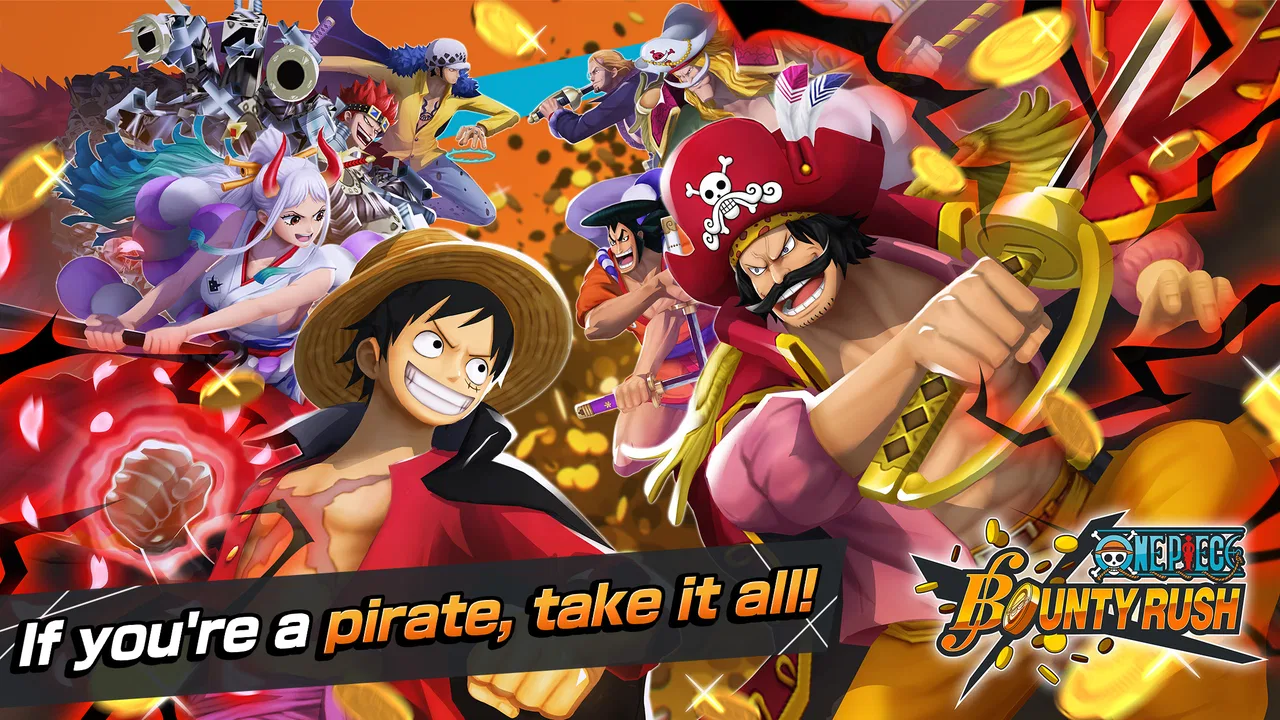
ONE PIECE Bounty Rush is a 3D action game for mobile devices where players compete in real-time, 4v4 team battles to collect the most berries. Set in the popular ONE PIECE universe, it features iconic characters and locations, allowing fans to immerse themselves in the pirate adventure.
02What are the system requirements for ONE PIECE Bounty Rush?
To run ONE PIECE Bounty Rush smoothly, Android users need at least version 5.0 (Lollipop) and 2GB of RAM. iOS users should have iOS 10.0 or later. It is recommended to have a stable internet connection and sufficient storage space, as the game includes high-quality graphics and frequent updates.
03Are there in-app purchases in ONE PIECE Bounty Rush?
Yes, ONE PIECE Bounty Rush includes in-app purchases. Players can buy currency and items to enhance their gameplay experience. While the game is free to download and play, these purchases can offer a competitive edge. However, they are optional, and players can enjoy the game without spending real money.
04Can I play ONE PIECE Bounty Rush with friends?
Absolutely! ONE PIECE Bounty Rush allows you to team up with friends for exciting 4v4 battles. You can invite friends to join your team, strategize together, and take on opponents in real-time. This feature enhances the social aspect and makes battles more engaging and fun.
05How often does ONE PIECE Bounty Rush receive updates?
The developers of ONE PIECE Bounty Rush regularly release updates to introduce new characters, features, and events. These updates help keep the game fresh and exciting for players. Additionally, updates often include bug fixes and performance improvements, so it's beneficial to have the latest version.
Pros
- Engaging real-time battles
- Diverse character roster
- Authentic One Piece visuals
- Frequent updates and events
- Strategic team play
Cons
- Occasional connectivity issues
- Some characters feel overpowered
- In-app purchases can be pricey
- Limited solo gameplay options
- Resource grind can be tedious

ONE PIECE Bounty Rush
Gallery